
When sourcing a retro phone handset, one of the first technical decisions is the connection interface.
Two common wired options are USB Type-C (USB-C) and 3.5mm.
From the outside, the handsets may look almost identical. However, the interface can significantly affect device compatibility, target customers, product positioning and the markets in which the handset can be sold.
For wholesalers, retailers and private-label brands, the right choice is therefore not simply a question of which connector is newer.
The more important question is:
Which interface is better suited to the devices and customers in your target market?
USB-C and 3.5mm Handsets: What Is the Main Difference?
The fundamental difference is how the handset communicates with the connected device.
A USB Type-C retro phone handset connects through a USB-C port and relies on the electronic design of both the handset and the host device to handle audio communication.
A 3.5mm handset uses a traditional audio connector and generally communicates through a compatible analog audio interface.
Both are wired solutions.
Neither requires Bluetooth pairing, and both can provide the familiar experience of holding a traditional telephone receiver.
However, they are intended for different device environments.
That distinction becomes increasingly important when selecting products for wholesale or private-label programs.
When Does a USB Type-C Retro Handset Make Sense?
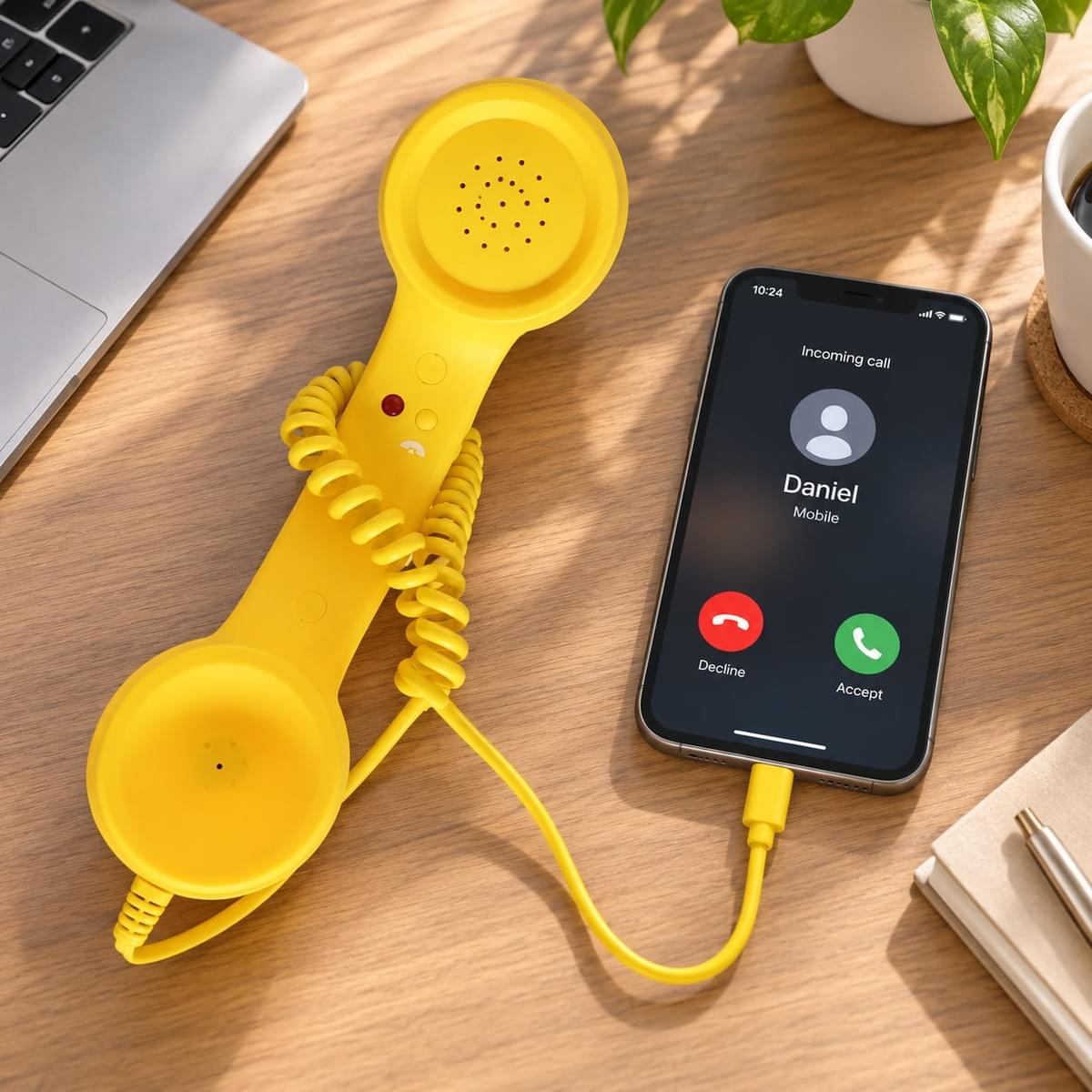
USB Type-C is increasingly common across smartphones, tablets, laptops and other modern electronic devices.
For buyers targeting newer consumer electronics, a USB-C handset can therefore be a natural product choice.
Suitable for Modern USB-C Devices
USB-C handsets may be used with compatible:
- Smartphones
- Tablets
- Laptops
- Desktop computers
- Communication terminals
- Voice applications
- Online meeting systems
- AI voice tools
For retail buyers, this allows the traditional telephone-receiver form to be positioned as a modern communication accessory rather than simply a nostalgic product.
Direct Wired Connection
One advantage of a wired USB-C handset is that users do not need to complete a Bluetooth pairing process.
The handset connects physically to a compatible device.
For products used on desks, in offices or in repeated communication scenarios, this can create a straightforward user experience.
Strong Fit for Modern Product Positioning
USB-C also supports the visual positioning of the product.
A colorful retro handset connected to a modern smartphone or laptop creates an intentional contrast:
classic telephone design combined with modern technology.
This makes USB-C handsets especially suitable for lifestyle retailers, online stores and brands that want a product with both functional and visual appeal.
USB-C Compatibility Still Needs to Be Tested
One important point for B2B buyers is that USB-C is a connector format, not a guarantee of universal audio compatibility.
Two devices may both have USB-C ports but support audio accessories differently.
The handset's internal electronics, the connected device and the operating system can all influence compatibility.
This is why professional buyers should not assume that a USB-C handset will automatically work with every USB-C smartphone, tablet or computer.
Before placing a bulk order, test samples with the actual devices commonly used in the target market.
For a private-label program, compatibility testing should ideally be completed before packaging claims or marketing materials are finalized.
When Does a 3.5mm Retro Handset Make Sense?
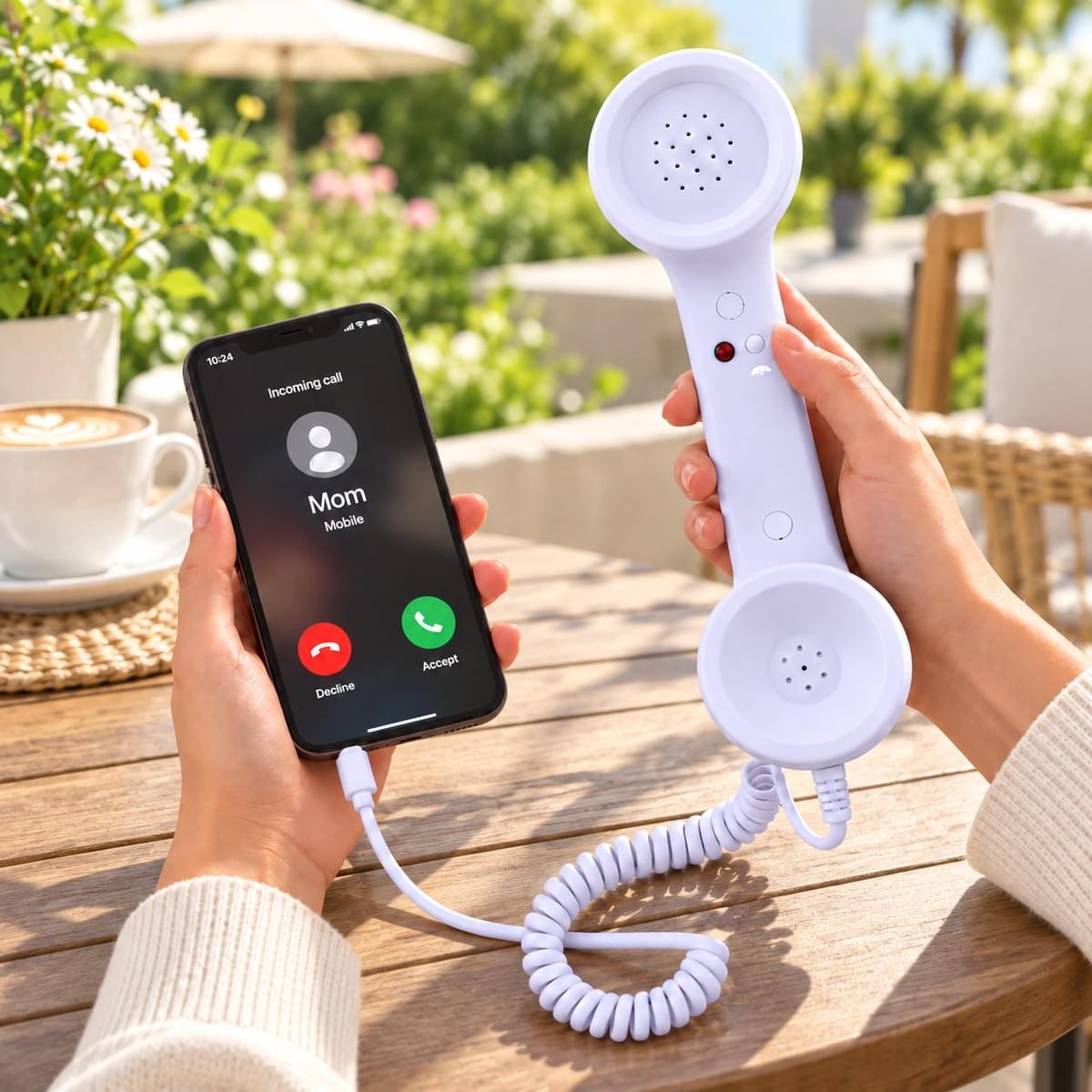
The 3.5mm handset remains relevant wherever compatible audio ports are still widely used.
These may include certain computers, communication equipment, tablets, commercial terminals and other devices.
For buyers serving these markets, 3.5mm can still be a practical solution.
Simple Audio Connection
A compatible 3.5mm connection provides a familiar wired audio interface.
There is no Bluetooth pairing process, battery or wireless connection to manage.
For certain commercial or fixed-device applications, this simplicity can be useful.
Suitable for Existing Equipment
Not every market immediately moves to the newest interface.
Commercial systems and business equipment often remain in use for longer periods than consumer smartphones.
A distributor supplying accessories for existing equipment may therefore find that a 3.5mm handset serves the customer base better than a USB-C version.
Useful for Specific B2B Applications
A product does not need to use the newest connector to be commercially relevant.
The correct interface depends on where the handset will actually be used.
For example, a B2B buyer supplying communication accessories to businesses may have very different requirements from a lifestyle retailer selling accessories for newer smartphones.
3.5mm Compatibility Also Requires Attention
Like USB-C, a 3.5mm connector does not automatically guarantee compatibility with every device.
Different devices can use different audio configurations, and microphone support should also be confirmed.
A product intended only for audio output is different from a handset that must support both listening and speaking.
For this reason, buyers should test:
- Receiver audio
- Microphone input
- Call functions
- Connector fit
- Volume performance
- Intended device compatibility
This is especially important if the handset will be marketed for a specific phone, computer or communication terminal.
USB-C vs 3.5mm: Which Is Better for Smartphones?
For newer smartphone-oriented markets, USB Type-C generally offers stronger long-term product positioning.
Many modern smartphones rely on USB-C for wired accessories, while dedicated 3.5mm audio ports are less common on newer models.
A USB-C handset can therefore be easier to position as an accessory for current-generation mobile devices.
However, this does not mean every smartphone market should automatically choose USB-C.
The buyer should still investigate which devices are most common among the target customers and confirm actual compatibility through testing.
Which Is Better for Computers and Desktop Use?
This depends much more heavily on the specific computer environment.
Many modern laptops include USB-C ports, while some computers continue to provide 3.5mm audio connections.
For desktop communication, both interfaces can therefore remain relevant.
If the target audience primarily uses modern laptops with USB-C connectivity, a USB-C handset may provide a cleaner product proposition.
If the target equipment has existing 3.5mm audio ports, the 3.5mm version may be more practical.
The best approach is to start with the customer's real device environment rather than choosing an interface based only on market trends.
What About Retail and Lifestyle Markets?
Interface selection also affects how the handset is marketed.
For lifestyle retailers, colorful handset collections are often sold partly because of their visual identity.
In this type of market, USB-C can strengthen the connection between retro styling and modern technology.
Bright colors such as yellow, green, blue, red, pink or purple can help turn the handset into a recognizable lifestyle accessory.
For a distributor supplying more traditional communication accessories, black, white or neutral-colored 3.5mm handsets may be more suitable.
The handset structure may be similar, but interface, color and packaging together determine the final market positioning.
Comparing the Two Interfaces for B2B Sourcing
For buyers evaluating both versions, several factors should be considered.
Target Device
Identify the devices your customers actually use.
Do they primarily use smartphones, laptops, desktop computers or specialized equipment?
Target Market
A consumer electronics retailer and an industrial equipment distributor may require completely different products.
Compatibility
Test real samples with representative devices before placing the production order.
Product Positioning
USB-C may fit a more modern consumer or lifestyle proposition, while 3.5mm can remain useful in existing audio and commercial-device environments.
Product Life Cycle
Consider not only what customers use today, but also whether the selected interface is likely to remain relevant during the expected selling period of the product.
Choosing the right interface is only one part of selecting a supplier. Buyers should also consider manufacturing experience, product quality and customization capability when choosing a reliable retro phone handset manufacturer.
Should a Wholesaler Offer Both USB-C and 3.5mm?
For some distributors and wholesalers, offering both interfaces can make sense.
The two products do not necessarily compete directly.
Instead, they can serve different device groups.
For example, a distributor may offer:
- USB Type-C handsets for newer smartphones and computers
- 3.5mm handsets for compatible computers, terminals and existing equipment
This gives buyers more flexibility and reduces dependence on a single device ecosystem.
For smaller retailers, however, beginning with one clearly defined interface may be easier.
The first product should normally match the largest or most commercially relevant customer group.
What About OEM and Private-Label Projects?
Interface selection should happen early in an OEM or private-label project.
Before spending time on custom colors, logos or packaging, the buyer should first confirm:
- Target device
- Required interface
- Expected order quantity
- Target market
- Compatibility requirements
Once the technical direction is clear, product differentiation can be developed through color, patterns, branding and packaging.
This sequence reduces the risk of creating an attractive product that does not fit the intended device environment.
NEW POWER TECH supports OEM and ODM retro phone handset projects using existing handset designs as well as different customization options depending on project requirements.
Model 569 USB Type-C Retro Phone Handset
For buyers looking for a wired USB-C solution, the NEW POWER TECH Model 569 USB Type-C retro phone handset is available in multiple solid-color options.
The model can be considered for wholesale, retail and private-label programs where a modern USB Type-C interface is required.
Color options also allow different market positioning, from more traditional black and white versions to brighter lifestyle-oriented collections.
For 3.5mm projects, buyers can select from compatible handset models according to the required product structure, target device and order quantity.
How to Choose Between USB-C and 3.5mm
There is no single answer that applies to every project.
Choose USB Type-C when the target market is primarily using newer USB-C smartphones, tablets or computers and the product is intended to fit a modern communication or lifestyle-accessory category.
Choose 3.5mm when the target devices already provide compatible audio ports and the application benefits from a traditional wired audio connection.
For many B2B projects, the most reliable decision comes from three steps:
identify the target device → test the handset → confirm the market positioning.
That is more useful than simply choosing whichever connector appears more modern.
Frequently Asked Questions
Is USB-C better than 3.5mm for a retro phone handset?
Neither interface is universally better. USB-C is often more suitable for newer devices, while 3.5mm remains useful for compatible equipment and specific B2B applications.
Can a USB-C handset work with every USB-C smartphone?
No. USB-C connector shape alone does not guarantee audio compatibility. Samples should be tested with the intended devices.
Can a 3.5mm handset support both microphone and audio?
It can if the handset and host device use compatible audio configurations. Buyers should confirm both microphone input and receiver output during sample testing.
Which interface is better for wholesale?
It depends on the customers being served. Wholesalers targeting multiple markets may choose to carry both USB-C and 3.5mm handset options.
Can USB-C and 3.5mm handsets be customized?
Yes. Depending on the handset model, production process and quantity, customization can include colors, logos, patterns, packaging and other project specifications.
How can I choose the right handset for my market?
Start with the target device and customer group. Then test the appropriate interface before finalizing colors, branding and packaging.
Contact NEW POWER TECH to discuss your target devices, interface requirements, order quantity and customization needs.