
When buyers evaluate a retro phone handset, appearance often gets the most attention first. However, for long-term customer satisfaction, one of the most important factors is still telephone receiver audio quality.
A handset may look attractive and match a strong color concept, but if the sound is weak, unclear or unstable, the overall product value will be reduced. For B2B buyers, especially those working on wholesale, OEM or ODM projects, understanding what affects audio performance is an important part of product selection.
Inside a retro phone handset, sound quality is not determined by one single part. It is the result of several connected elements working together, including the speaker, microphone, internal audio circuit, cable structure, connector stability and assembly consistency.
Buyers evaluating a wired product can also review our 569 USB Type-C retro phone handset collection as a reference for the product format discussed in this article.
What Affects Audio Quality in a Retro Phone Handset?
In simple terms, handset audio quality is shaped by both component quality and manufacturing consistency. A good-looking handset still needs a stable internal structure to deliver clear listening and speaking performance.
For a professional manufacturer, audio quality evaluation usually involves several linked areas:
- the speaker unit used for sound output
- the microphone used for voice input
- the internal circuit or audio-control design
- the cable and connector structure
- the assembly accuracy of the handset body
Each of these areas can influence the final user experience. If one part is unstable, the entire audio path may be affected.
Main Internal Components Buyers Should Understand
For B2B sourcing and product development, buyers do not need to become electronics engineers, but it is useful to understand the basic role of each key component inside the handset.
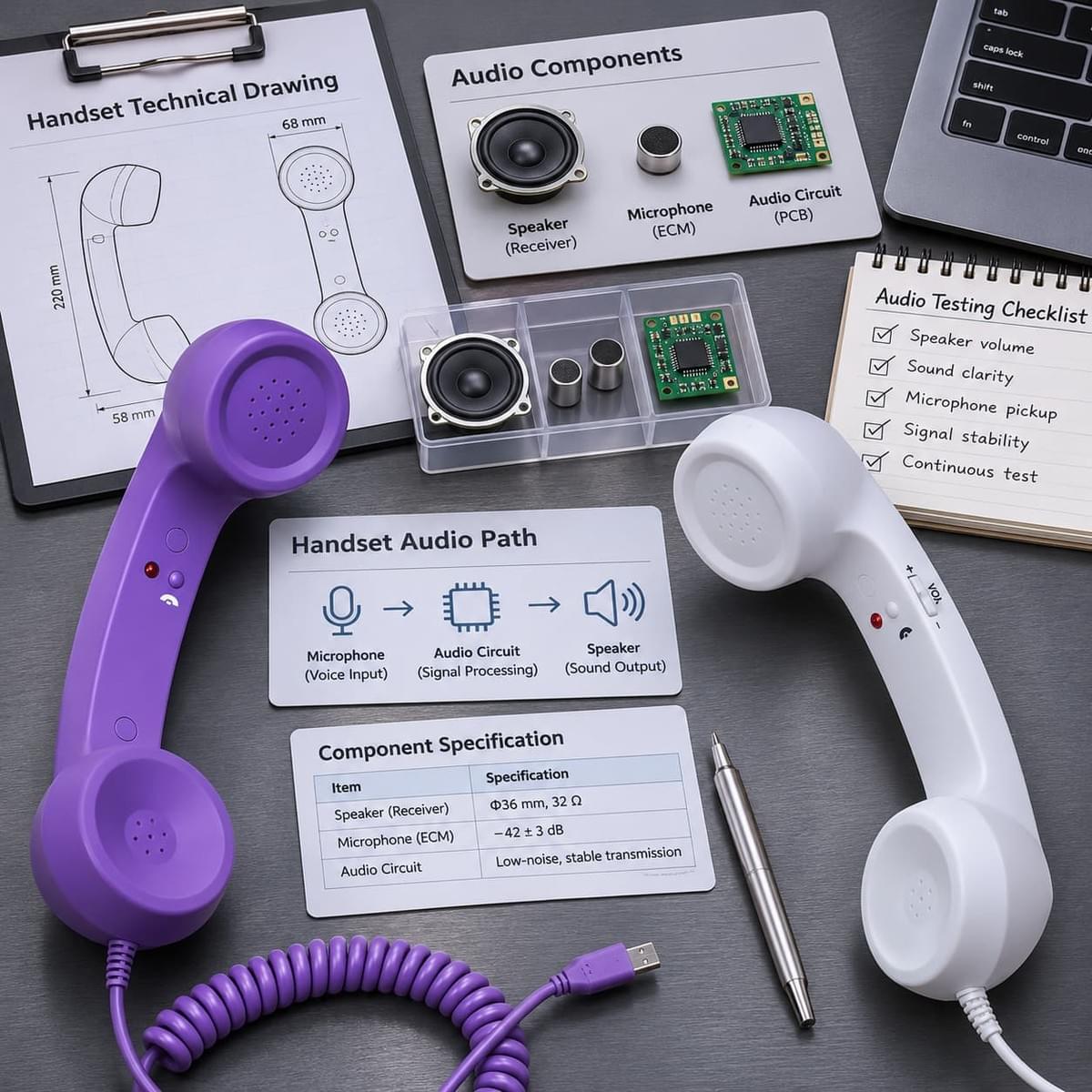
1. Speaker Unit
The speaker is responsible for delivering incoming sound to the user. Its quality affects volume, clarity and listening comfort. If the speaker performance is weak or inconsistent, customers may feel that the handset sounds thin or unclear.
2. Microphone
The microphone determines how well the user's voice is captured. In practical use, this influences speech clarity during calls, voice-input use and general communication performance.
3. Audio Circuit or Chip Design
The internal circuit helps manage the audio signal path between the connector, speaker and microphone. Stable circuit design helps reduce distortion, improve reliability and support more consistent performance across production batches.
In the next section, we will look more closely at how these core parts influence handset performance and why they matter in OEM and wholesale product evaluation.
How Key Components Influence Handset Sound Performance
Once buyers understand the main internal parts, the next step is to evaluate how those parts affect real sound performance. In a retro handset project, audio quality is influenced not only by the parts themselves, but also by how they are selected, matched and assembled.
Speaker Quality and Acoustic Output
The speaker unit directly affects the listening side of the handset. A better speaker can support clearer voice playback, more stable output and a more balanced sound profile. A weaker speaker may still function, but the listening experience may feel sharp, flat or underpowered.
For B2B projects, this matters because product positioning is different from one market to another. Some buyers only need a functional entry-level handset, while others want stronger perceived quality for retail, gifting or premium accessory channels.
Microphone Performance and Voice Pickup
The microphone affects how clearly the user's voice is transmitted. If the microphone is unstable, the other side may hear lower volume, weak voice detail or inconsistent pickup.
From a manufacturing perspective, microphone performance should be evaluated together with the handset structure and the audio path. Even a decent microphone can perform poorly if the supporting internal design is not properly controlled.
Audio Circuit Stability
The audio circuit or internal chip design helps support the overall signal transmission inside the handset. This area influences signal stability, functional consistency and the coordination between the input and output components.
For a buyer, this means that evaluating only the outer appearance of the handset is not enough. A manufacturer should also be able to explain the internal audio structure and how the product is built for stable mass production.
Cable Structure and Connector Quality Also Matter
In many sourcing discussions, buyers focus on the visible handset body and the cosmetic finish. However, the cable and connector structure are also important parts of telephone receiver audio quality.
Cable Quality
The cable influences signal transmission and long-term durability. In practical use, repeated pulling, bending and daily handling can affect performance over time. A poorly controlled cable structure may lead to unstable audio or shorter service life.
Connector Compatibility and Stability
For USB Type-C, 3.5mm and other interface versions, connector stability is also critical. The connector needs to work together with the internal structure and the intended device category. If the connector or cable end is not properly matched, the user experience can become inconsistent.
For buyers sourcing USB-C models, our guide to USB Type-C handset compatibility with smartphones, tablets and computers explains why the connector alone does not determine compatibility.
This is why professional buyers usually review more than one sample. They want to confirm both appearance and functional performance before moving into larger-volume production.
Why Manufacturing Consistency Is So Important
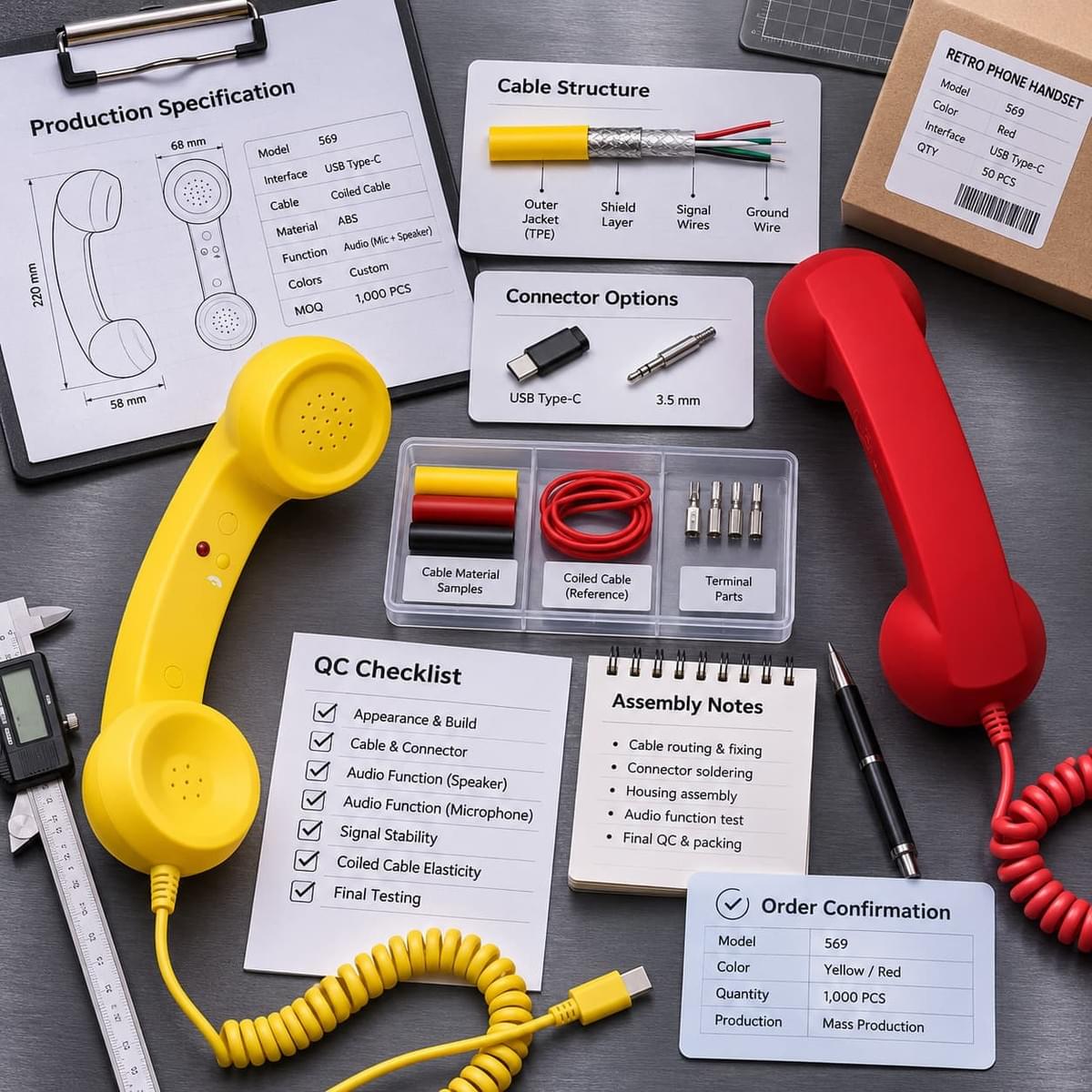
Even if a handset uses acceptable speaker and microphone components, the final result still depends on production consistency. For wholesale and OEM buyers, this is one of the most important differences between a sample that sounds good once and a product line that stays reliable over repeated production.
Manufacturing consistency includes several practical factors:
- stable component sourcing
- consistent cable and connector assembly
- clear quality-control standards
- repeatable assembly procedures
- final testing before shipment
For this reason, a good retro handset manufacturer should not only offer multiple colors or interface options, but also be able to explain how the internal product structure is managed during production.
What Buyers Should Ask When Evaluating Audio Quality
When reviewing a retro phone handset for B2B sourcing, buyers can ask a few practical questions to better understand the product:
- What speaker and microphone structure is used in this model?
- How is audio consistency checked during production?
- Is the cable structure designed for stable daily use?
- Can the supplier explain the internal audio path and component matching?
- Can samples be reviewed before larger-volume production?
These questions help buyers move beyond surface-level comparison and evaluate whether the supplier can support repeatable, reliable supply.
Conclusion
A retro phone handset may appear simple from the outside, but the final user experience depends on multiple internal details. The speaker, microphone, audio circuit, cable structure and assembly quality all play a role in overall performance.
For buyers working on wholesale, OEM or ODM projects, understanding these key components makes it easier to compare suppliers, review samples and choose a product with stronger long-term value.
If you are developing a handset project and want to better understand model structure, audio-related components or production support, explore our OEM and ODM retro phone handset solutions or contact NEW POWER TECH to discuss your requirements.
NEW POWER TECH — Retro Phone Handsets, Direct from the Manufacturer. Wholesale • OEM • ODM.