For a retailer, lifestyle brand or distributor, a retro phone handset does not always need to be sold under the manufacturer's standard presentation.
A private-label project allows the buyer to start with an existing handset platform and develop a product presentation that fits its own brand, market and retail strategy.
Depending on the project, this may include a logo, branded packaging, custom colors, printed patterns, manuals, labels and other presentation details.
The important point for B2B buyers is that private label does not automatically mean developing an entirely new handset from the beginning.
In many cases, an existing product such as the 569 USB Type-C retro phone handset family can serve as the product platform while the buyer develops the branding and presentation around it.
What Does Private Label Mean for a Retro Phone Handset?
In a private-label project, the product is prepared for sale under the buyer's own retail or commercial identity.
The level of customization can vary considerably.
A relatively simple project may use an existing handset color and standard product structure while adding branded packaging and product information.
A more developed project may also include:
- Custom logo application
- Custom handset colors
- Printed patterns or decorative surfaces
- Branded retail packaging
- User manuals and insert cards
- Product labels and barcode information
- Customized assortment planning
This flexibility allows buyers to decide how far they want to move from a standard wholesale product toward a more differentiated private-label program.
Start with the Product Platform
Before discussing logos and packaging, the buyer should first decide which handset model and connection type fit the target market.
Important decisions may include:
- USB Type-C, 3.5mm or Bluetooth
- Handset shape and product model
- Standard or custom color
- Target device and application
- Expected order quantity
Starting with an existing platform can reduce development complexity because the basic product structure already exists.
The buyer can then focus resources on the parts of the project that customers will actually see: color, branding, packaging and retail presentation.
Logo Application: Product, Packaging or Both?
One of the first private-label decisions is where the buyer's branding should appear.
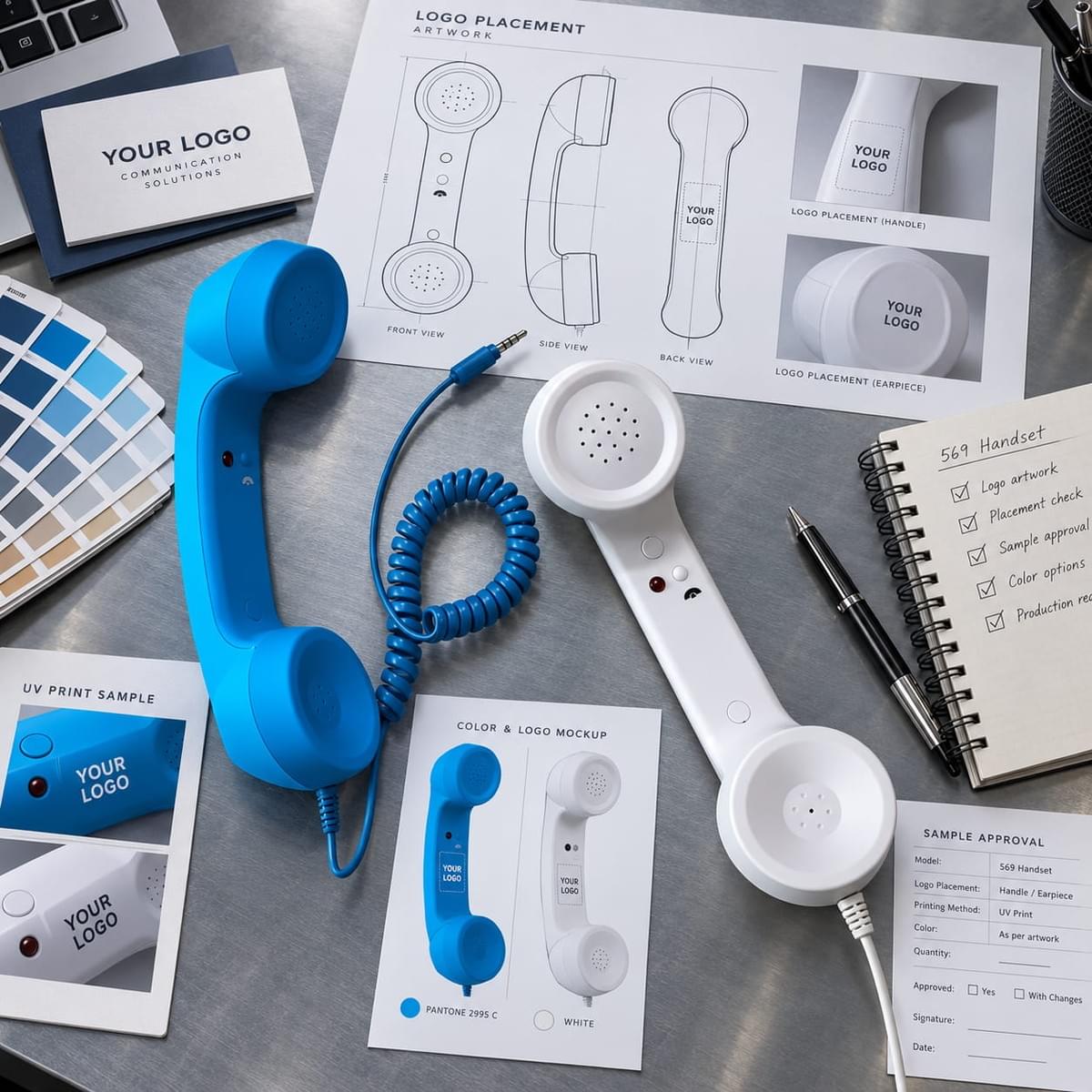
In some projects, the product itself can remain visually clean while the branding appears mainly on the retail packaging, manual and product label.
Other projects may require a logo or graphic on a selected handset surface.
The correct method depends on the logo size, artwork, housing surface and required print area.
For localized graphics, a process such as UV printing can be evaluated depending on the product surface and design requirements.
Before production, the logo artwork and placement should be reviewed on a mockup or physical sample.
This allows the buyer to confirm scale, position and visual balance before the branding is applied to a larger production quantity.
Packaging Is Part of the Product Experience
For a private-label retail program, packaging is not simply a box used for shipping.
It is one of the first parts of the product the end customer sees.
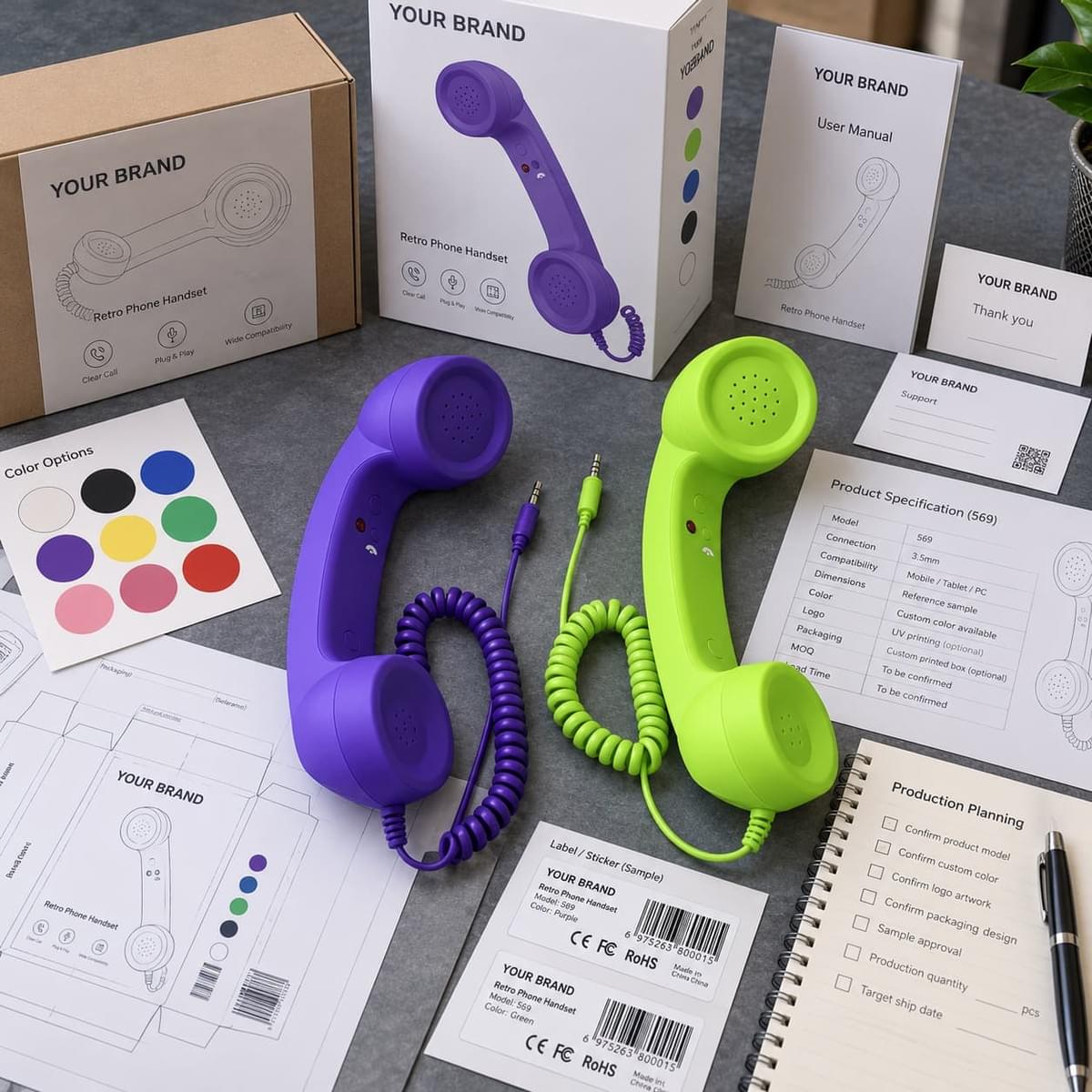
Depending on the project, buyers may consider:
- Neutral standard packaging
- Custom printed retail boxes
- Logo and brand information
- Product specification labels
- Barcode or SKU labels
- User manuals
- Packaging inserts
The right solution depends on sales channel, quantity, brand positioning and budget.
An e-commerce seller may prioritize protection, labeling and efficient fulfillment, while a lifestyle retailer may place greater emphasis on shelf presentation and gifting appeal.
Product Customization Can Go Beyond the Logo
Private-label development can also involve the physical appearance of the handset.
Standard colors are often the fastest route to market, particularly for buyers testing a new category.
For more differentiated programs, custom colors can be developed according to project requirements and production quantity.
Patterned designs can also be evaluated when a buyer wants a stronger visual identity than a solid-color product provides.
These options are part of the broader NEW POWER TECH OEM and ODM development process.
Packaging and Product Design Should Be Planned Together
One common mistake is developing the product and packaging as two completely separate projects.
In reality, the product color, packaging graphics, insert cards and retail presentation should work together.
For example, a multi-color handset assortment may require clear SKU identification so warehouse staff, retailers and customers can distinguish each color without opening the box.
Likewise, a patterned product may require packaging artwork that reflects the correct design rather than using one generic image across every SKU.
Planning these details before mass production reduces unnecessary packaging changes later.
Why Samples Matter in a Private-Label Project
A private-label sample is not only for checking whether the handset works.
It may also be used to evaluate:
- Logo size and position
- Product color
- Printed pattern appearance
- Retail packaging
- Labels and barcodes
- User manual content
- Overall brand presentation
Different parts of the project may be approved at different stages.
For example, product color may be confirmed before final packaging printing begins.
This staged approval process helps reduce the risk of producing a large quantity with an incorrect branding or packaging detail.
Why MOQ Changes with the Level of Customization
Private-label MOQ is not determined by one universal number.
An order using an existing product and neutral packaging can have a very different production requirement from a project involving custom colors, printed patterns and fully customized retail packaging.
Additional customization may require:
- Artwork setup
- Color matching
- Printing preparation
- Packaging production
- Sample approval
- Separate production setup
Buyers should therefore share the target quantity early in the discussion.
This allows the manufacturer to recommend a practical level of customization instead of developing a proposal that does not match the commercial size of the project.
What Buyers Should Prepare Before Requesting Private Label
A clearer initial brief usually leads to a faster and more useful quotation.
Before contacting a manufacturer, buyers should ideally prepare:
- Preferred handset model
- Required interface
- Estimated order quantity
- Standard or custom color requirements
- Logo artwork
- Packaging expectations
- Target market
- Required launch schedule
If custom packaging is required, dimensions, artwork direction and retail-channel requirements can be refined during development.
Buyers who are still evaluating the commercial size of a first order can also review our wholesale retro phone handset buying guide.
A Practical Private-Label Development Workflow
A private-label handset project can be easier to manage when the development sequence is clearly defined.
A practical workflow is:
select product platform → define customization → prepare artwork → develop samples → approve product and packaging → confirm production specifications → mass production.
This sequence helps prevent packaging, branding and product specifications from being finalized independently of one another.
Private Label Does Not Need to Start with Maximum Customization
A new buyer does not necessarily need custom color, custom printing and custom packaging in the first order.
For many projects, a more practical starting point is an existing handset model and standard color combined with selected branding elements.
Once the product has been tested in the market, the buyer can expand into more customized colors, patterns or packaging in future production runs.
This phased approach can reduce development risk while still building a path toward a fully differentiated private-label product line.
Final Thoughts
A successful private-label retro phone handset project is not defined by a logo alone.
The product model, interface, color, branding, packaging, labeling and retail presentation all contribute to the final customer experience.
For B2B buyers, the most reliable approach is therefore:
product platform → branding strategy → physical samples → approval → production.
Starting with an existing product platform can keep development practical while still allowing the buyer to create a distinctive branded handset program.
Contact NEW POWER TECH to discuss private-label retro phone handsets, logo application, custom packaging, product customization, samples and OEM/ODM production requirements.
Frequently Asked Questions
Can I put my own logo on a retro phone handset?
Logo application can be evaluated according to the handset surface, artwork, required print area and project quantity. Buyers should confirm logo size and placement through a mockup or sample before production.
Can I use my own branded packaging?
Yes. Custom packaging can be evaluated according to the project quantity, packaging structure, artwork and retail requirements.
Do I need a custom handset mold for private label?
Not necessarily. Many private-label projects can begin with an existing handset platform and customize branding, color, pattern or packaging without developing a completely new handset structure.
Can I customize both the product color and packaging?
Yes. Product and packaging customization can be combined, but MOQ, sampling and production requirements should be evaluated together.
Why do private-label projects need samples?
Samples allow the buyer to review product appearance, logo placement, color, packaging, labels and other details before mass production.
Is private label suitable for a first wholesale order?
It can be, but the appropriate level of customization depends on quantity, budget and market stage. Buyers testing a new category may choose a simpler branding program first and expand customization after demand is established.