
The retro phone handset is based on one of the most familiar communication designs of the past, yet it continues to find new applications with modern devices.
Today's retro handsets are no longer limited to traditional landline telephones. Depending on the model and interface, they can be designed for compatible smartphones, tablets, laptops, desktop computers and other electronic devices.
This combination creates an unusual product proposition:
a familiar physical design paired with modern connectivity.
For consumers, the appeal can come from color, nostalgia, comfort or the experience of physically picking up a handset.
For retailers, wholesalers and private-label brands, the category offers something else: a recognizable product shape that can be adapted to different visual styles, interfaces and market positions.
So why is the retro handset still relevant in a world of wireless earbuds and smartphones?
Several factors help explain its renewed appeal.
1. Familiar Design Still Has Value
Telephone receivers have been used for generations.
Their basic shape is immediately recognizable: an earpiece at one end, a microphone at the other and a curved body designed to be held during a conversation.
Modern devices have changed dramatically, but the human interaction behind a voice call has not disappeared.
A retro handset brings that familiar physical experience back into a modern environment.
Instead of holding a flat smartphone against the face or speaking toward a laptop, the user picks up a dedicated communication device.
That physical action can make a call feel more intentional.
The handset therefore has value not simply because it looks old, but because its form is still closely associated with communication.
2. Retro and Y2K-Inspired Products Have Strong Visual Appeal
One reason retro handsets work well in modern retail is their distinctive appearance.
The handset shape immediately separates the product from conventional mobile accessories.
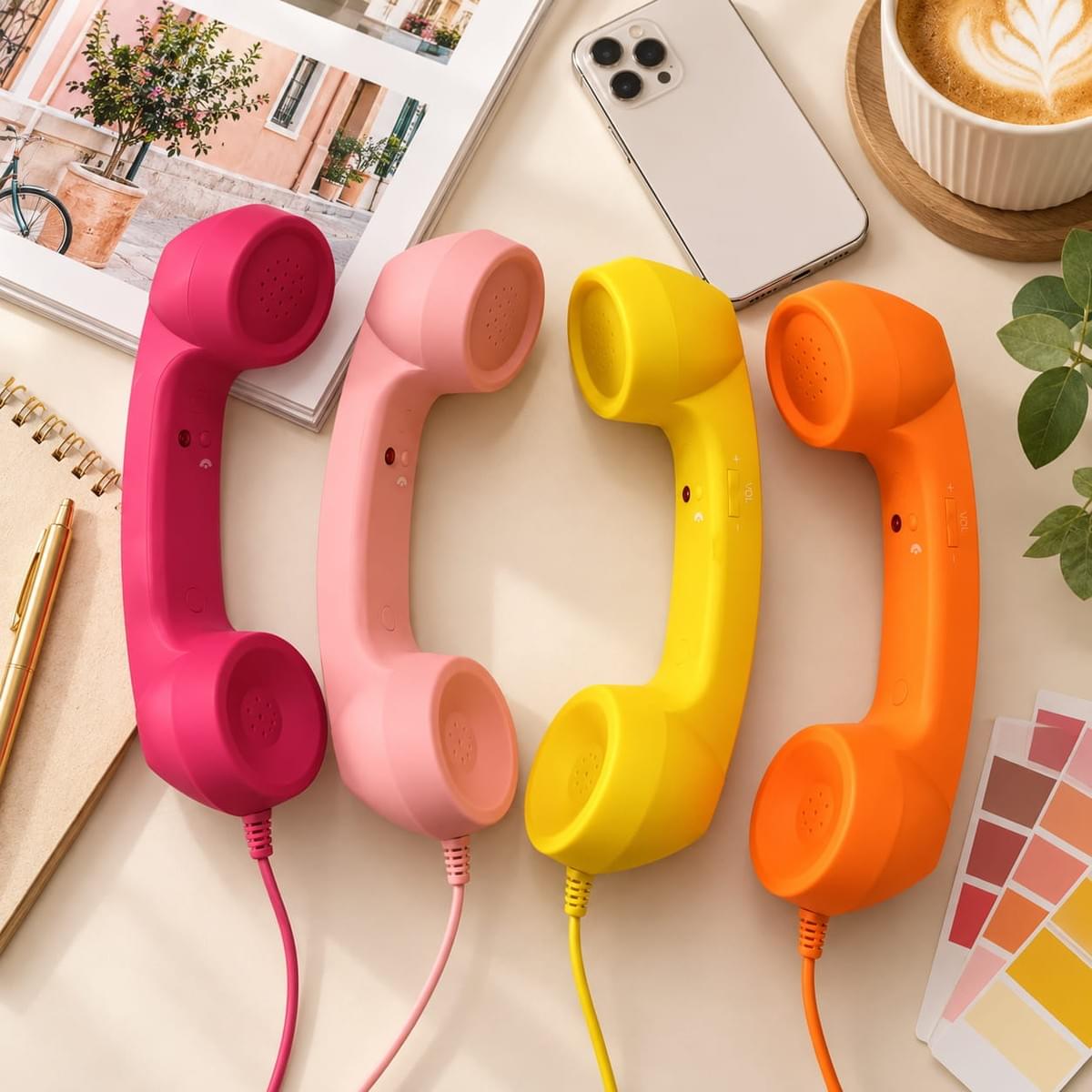
When produced in bright colors such as:
- Pink
- Magenta
- Orange
- Yellow
- Green
- Blue
- Red
the product can become part of a broader lifestyle collection rather than appearing only as communication hardware.
This is particularly useful for online stores and design-focused retailers, where product photography and visual identity play an important role in attracting attention.
The same handset can also be positioned very differently simply through color.
A black or white handset can feel minimal and professional.
A bright orange or magenta handset can feel playful, expressive and more closely aligned with retro or Y2K-inspired styling.
For retailers, that flexibility creates opportunities to build collections for different audiences without changing the basic product concept.
3. Color Has Become Part of the Product Experience
Traditional telephone equipment was often offered in relatively limited color ranges.
Modern retro handsets do not have to follow the same rules.
Color can now become one of the defining features of the product.
A retailer may choose a small coordinated collection, while a private-label brand may develop colors that match its own visual identity.
Examples could include:
Classic: black, white and red
Bright: blue, green and yellow
Trend-focused: magenta, orange and pink
For B2B buyers, this means the purchasing decision is not only technical.
It also involves merchandising.
The question becomes:
Which colors will work best for the audience, store and brand positioning?
That is one reason retro handsets can fit lifestyle retail more easily than many conventional electronic accessories.
4. Modern Connectivity Gives the Retro Form a New Purpose
The visual appeal would be limited if the product only worked with old telephone systems.
Modern interfaces are what make the category relevant again.
Depending on the model, retro handsets may use:
- USB Type-C
- 3.5mm
- Bluetooth
- Other device-specific configurations
- Buyers deciding between different wired interfaces can compare USB-C and 3.5mm retro handsets before selecting a product.
A USB Type-C retro phone handset, for example, combines the traditional receiver shape with an interface commonly found on modern electronic devices.
That contrast between appearance and technology is part of the product's appeal.
From the outside, it looks familiar and nostalgic.
From a functional perspective, it can be designed around modern devices.
For B2B buyers, however, interface selection and compatibility still need to be tested carefully. The presence of a USB-C connector alone does not mean that a handset will work universally with every USB-C device.
5. A Handset Can Create a More Focused Calling Experience
Smartphones are designed to perform many tasks at once.
A retro handset does something very different.
When a user picks it up, the product has one obvious purpose: voice communication.
That simplicity can create a more focused experience.
In an office environment, for example, a wired handset may be used for:
- Voice calls
- Online communication
- Customer conversations
- Desktop communication
- Compatible voice applications
It can also provide a more private listening experience than using an external computer speaker in a shared workspace.
The product therefore does not have to compete directly with a smartphone.
Instead, it can function as a physical communication accessory connected to the device.
6. The Physical Experience Is Part of the Appeal
There is an important difference between tapping a screen and picking up a handset.
The handset has weight, shape and a clear physical orientation.
That creates a different user experience.
For some customers, this may simply feel more comfortable during longer conversations.
For others, the attraction is emotional or visual: using a traditional receiver with a modern device creates an intentionally retro experience.
This physical interaction is difficult to reproduce with a standard pair of earbuds.
That does not make one product better than the other.
It simply means the handset serves a different type of user experience.
7. Retro Handsets Can Work in Shared Offices and Desktop Setups
The product is also relevant beyond personal smartphone use.
Consider a shared office or studio where users frequently communicate through computers.
Speaking through external speakers can disturb other people nearby.
A handset provides a dedicated receiver close to the ear and a microphone close to the mouth.
Depending on the model and system compatibility, this makes the form suitable for desktop communication scenarios.
The product can also become part of the visual identity of a workspace.
A black or white handset may suit a more professional desk environment, while a colorful handset can create a distinctive creative-office setup.
For retailers selling desk accessories or workspace products, this opens another possible positioning route.
8. Voice and AI Applications Create New Possibilities
Voice interaction is becoming increasingly common across digital tools and software.
That creates another potential use case for the physical handset form.
Instead of speaking toward a laptop microphone, a user may prefer the experience of picking up a handset and speaking into a dedicated device.
The concept can be particularly interesting for:
- Voice assistants
- Desktop voice tools
- AI voice interfaces
- Voice-driven workflows
- Communication software
Actual functionality depends on the handset, host device and application, so compatibility must still be confirmed.
But from a product-development perspective, the idea is notable:
the traditional handset can become a physical interface for modern voice software.
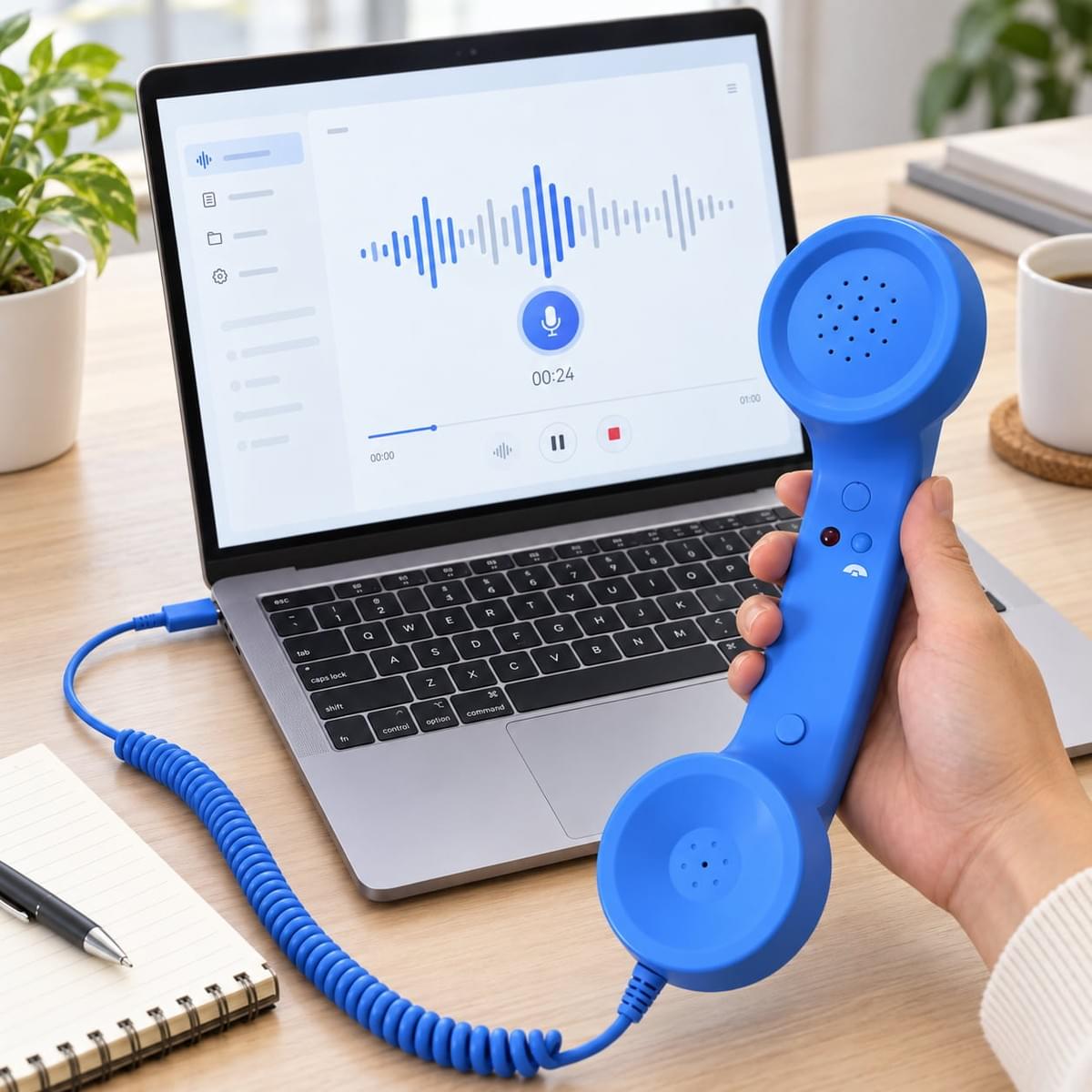
That gives the product a possible role beyond nostalgia alone.
9. The Product Is Highly Customizable for Retail Brands
Another reason the category remains commercially interesting is its customization potential.
The handset has a relatively large visible surface area compared with many small electronic accessories.
That provides opportunities for:
- Custom colors
- Printed patterns
- Logos
- Private-label packaging
- Coordinated cables
- Branded inserts
- Retail-ready collections
A retailer can begin with an existing handset model and develop a product range through color and packaging.
A larger brand may explore deeper OEM or ODM customization depending on project volume and requirements.
This flexibility helps the same basic product concept serve very different customer groups.
10. It Photographs Well for Online Retail
For e-commerce, product presentation matters.
The retro handset has a recognizable silhouette, which makes it visually clear even in a small product image.
Bright colors also allow retailers to create strong photography without complicated styling.
A magenta handset on a neutral desk, an orange handset beside a laptop or a blue USB-C handset connected to a smartphone can immediately communicate both personality and use.
This is particularly useful in visually driven online channels where buyers often discover products through images before reading detailed specifications.
For wholesale buyers supplying online retailers, that visual strength can become an important commercial advantage.
11. One Product Shape Can Serve Different Markets
The same basic handset concept can be positioned in several ways.
For a communication-accessory distributor, the focus may be interface, compatibility and reliability.
For a lifestyle retailer, the focus may be color and visual identity.
For a private-label brand, the priority may be customization and packaging.
For a promotional buyer, the product may be considered for branding or campaign use.
For an office buyer, the interest may be desktop communication.
This flexibility is one of the reasons the retro handset continues to find new applications.
The market is not defined by one single type of customer.
12. Retro Does Not Mean Technically Outdated
This distinction is important.
The word retro describes the product's visual language and physical form.
It does not necessarily describe the electronics inside it.
A modern retro handset can combine a traditional receiver shape with updated audio components, electronic circuits, cables and interfaces.
For buyers, it is therefore important to evaluate the product as a modern electronic accessory rather than assuming that every retro-looking handset has the same internal design.
This is also why choosing a reliable retro phone handset manufacturer matters when sourcing products for resale or private-label programs.
Retro Phone Handsets for Wholesale and Retail
For wholesalers and retailers, the renewed appeal of the retro handset creates several possible product strategies.
A buyer may begin with standard solid-color products.
A retailer may develop a coordinated seasonal collection.
A private-label brand may move into custom colors, printed designs or branded packaging.
The correct approach depends on the target market and expected sales volume.
For new projects, starting with an existing product platform can reduce risk while allowing the buyer to test demand. Buyers planning a first order can review our guide to wholesale retro phone handsets before selecting colors and quantities.
NEW POWER TECH Retro Phone Handsets
NEW POWER TECH has focused on telephone handset products since 2006.
Our handset range includes USB Type-C, 3.5mm and Bluetooth solutions for wholesale, retail, private-label and OEM/ODM projects.
The 569 USB Type-C retro phone handset is available in multiple solid-color options and can serve as a starting point for buyers targeting modern wired applications.
For projects requiring greater differentiation, customization can be discussed based on product, quantity and intended market.
Final Thoughts
The renewed interest in retro phone handsets is not based on nostalgia alone.
The product brings together several characteristics that remain commercially useful:
recognizable design, physical interaction, modern connectivity, strong color options and customization potential.
That allows the handset to move between technology, lifestyle, office and private-label markets.
For B2B buyers, the opportunity is not simply to sell an “old-fashioned telephone receiver.”
It is to take a familiar product form and reposition it for a modern audience.
Contact NEW POWER TECH to discuss handset models, interfaces, color options and OEM/ODM requirements for your market.
Frequently Asked Questions
Why are retro phone handsets becoming popular again?
Their appeal comes from a combination of familiar telephone styling, colorful product design, modern connectivity and new uses with smartphones, computers and voice applications.
Are retro handsets only lifestyle products?
No. Depending on the model, they can also be used for compatible office, desktop and communication applications.
Can a retro handset connect to a modern smartphone?
Some USB Type-C, 3.5mm or Bluetooth models may work with compatible smartphones. Compatibility should be tested with the intended devices before bulk purchasing.
Can retro phone handsets be customized?
Yes. Depending on the project, customization may include colors, patterns, branding, packaging and selected product specifications.
Are colorful retro handsets suitable for wholesale?
Yes. Colorful collections can be particularly suitable for lifestyle retailers, online stores and private-label programs, while more neutral colors may fit traditional communication channels.