
Color is one of the most visible ways to differentiate a retro phone handset for a retail collection, private-label brand or promotional project.
For B2B buyers, however, developing a custom color involves more than simply choosing a shade from a screen.
The final result depends on the handset material, production method, surface finish, color reference, sampling process and order quantity.
Buyers planning a custom retro phone handset should therefore understand how color development works before confirming packaging, marketing materials or a bulk order.
Custom color development is also one part of a broader OEM and ODM handset project, where product appearance, interface, branding and packaging may all need to be coordinated.
Standard Colors or a Custom Color?
The first decision is whether a project really requires a new color.
Existing standard colors are usually the simplest starting point because the material, appearance and production process have already been established.
They can be particularly useful for:
- First wholesale orders
- Market testing
- Smaller product launches
- Projects with shorter development schedules
Buyers can review the existing 569 USB Type-C solid-color handset family before deciding whether a completely new shade is necessary.
A custom color becomes more relevant when a retailer or brand wants a specific visual identity, seasonal collection or coordinated product range.
How Custom Handset Colors Are Developed
For solid-color ABS handset housings, one common production route is to develop the required plastic color using a matched color masterbatch during molding.
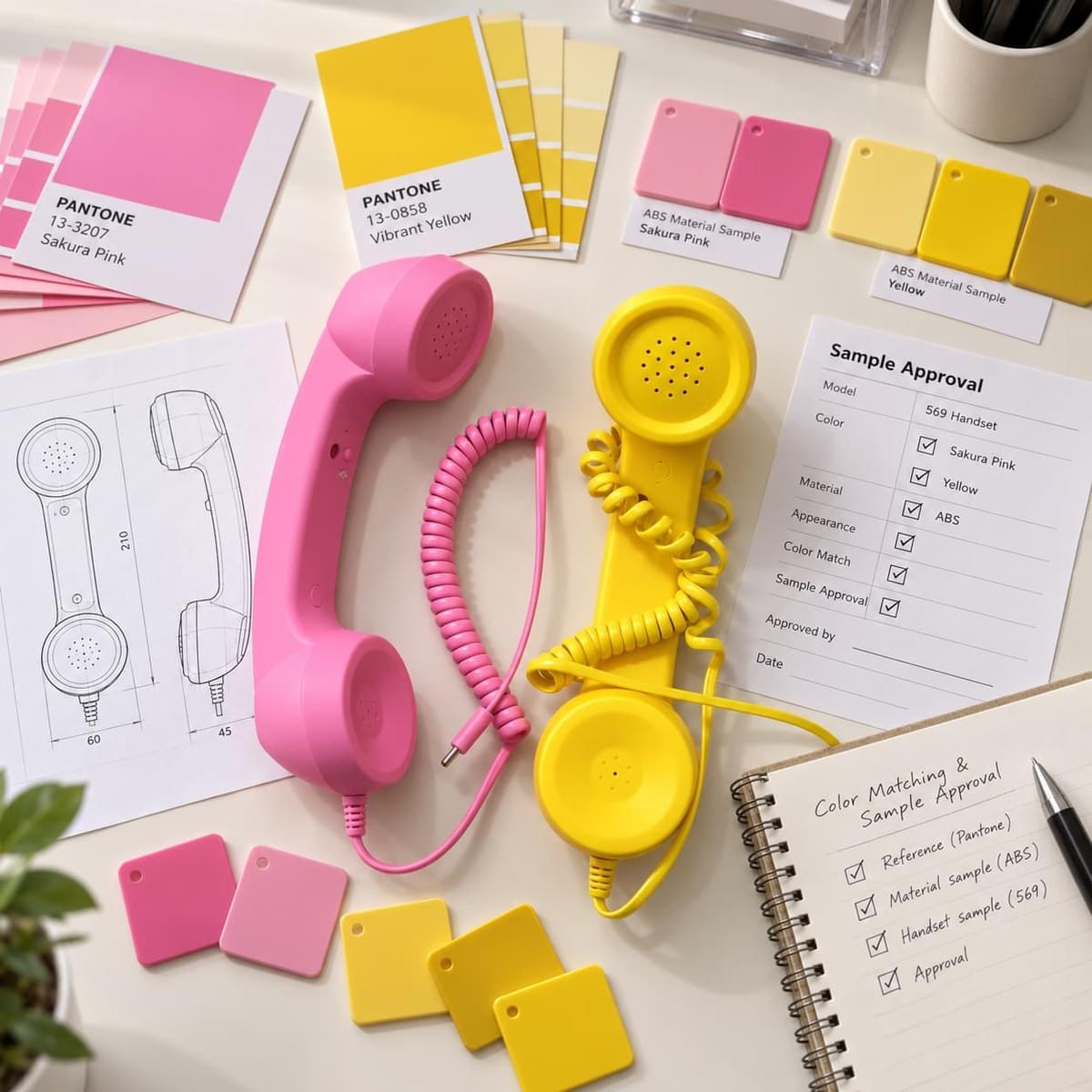
The process normally begins with a clear reference.
That reference may be:
- A Pantone-style color code
- A physical color sample
- An existing product supplied by the buyer
- A brand color standard
The production team then works toward a material color sample that can be evaluated before mass production.
For certain finishes or special visual effects, surface finishing such as spraying may also be considered instead of relying only on molded-in plastic color.
The right process depends on the desired appearance, order quantity, durability requirements and project budget.
Why the Same Color Code Can Look Different
A color reference is important, but it does not always guarantee that a finished plastic product will look identical to a printed color card or computer screen.
Several factors can influence the final appearance:
- ABS material characteristics
- Surface texture
- Gloss or matte appearance
- Lighting conditions
- Manufacturing process
- Acceptable production tolerance
This is why buyers should evaluate a physical sample rather than approving a production color only from a digital image.
The Importance of a Physical Color Sample
A physical sample creates a common reference between the buyer and manufacturer.
Before mass production, the buyer should review the actual handset or material sample under normal lighting and confirm that the color direction is acceptable.
Once approved, that sample can act as a reference for the production run.
For private-label projects, this step is especially important because packaging, photography and marketing materials may all be prepared around the final product color.
Our guide to OEM and ODM retro phone handsets explains how color development fits into the wider private-label process.
Why Custom Colors Usually Have Higher MOQs
Buyers often ask why a custom color cannot always be produced in the same small quantity as a standard color.
The reason is mainly production efficiency.
A new custom color can require:
- Color matching and material preparation
- Dedicated raw material or masterbatch
- Machine setup and production changeover
- Sample confirmation
- Cleaning and separation between different production colors
- Quality checking for color consistency
These steps create setup costs even before the first finished handset is produced.
For that reason, the MOQ for a custom molded or sprayed color is normally higher than the MOQ for an existing production color.
The exact quantity should be confirmed according to the handset model, required color and selected production process.
Injection Color and Surface Finishing Are Different Decisions
Buyers should also distinguish between a color molded into the ABS housing and a color or finish applied to the surface afterward.
A molded solid color is created through the plastic material itself.
Surface finishing can create other appearances, but it introduces an additional production step and may have different MOQ, cost and durability considerations.
Neither route is automatically better.
The correct choice depends on the intended retail positioning and the visual result required by the project.
Custom Solid Colors and Printed Designs Are Not the Same Process
A buyer requesting a new solid orange, pink or green handset is asking for a different type of customization from a buyer requesting a floral, leopard, graphic or multi-color printed design.
Printed patterns generally require separate decoration processes and should be evaluated as an independent OEM/ODM requirement.
This distinction matters because the sample cost, MOQ, production steps and lead time can be different.
How B2B Buyers Can Reduce Custom Color Risk
A new project does not always need an entire collection of custom colors at the beginning.
A lower-risk approach can be:
- Use existing colors for part of the assortment
- Develop one or two signature custom colors
- Approve physical samples before production
- Confirm acceptable color tolerance in advance
- Test customer demand before expanding the custom range
This approach can give a brand a distinctive visual identity without requiring every SKU to begin as a completely new development.
Buyers still evaluating order size can also review our wholesale retro phone handset buying guide.
Information to Prepare Before Requesting a Custom Color
Providing clear project information makes color development faster and reduces unnecessary back-and-forth.
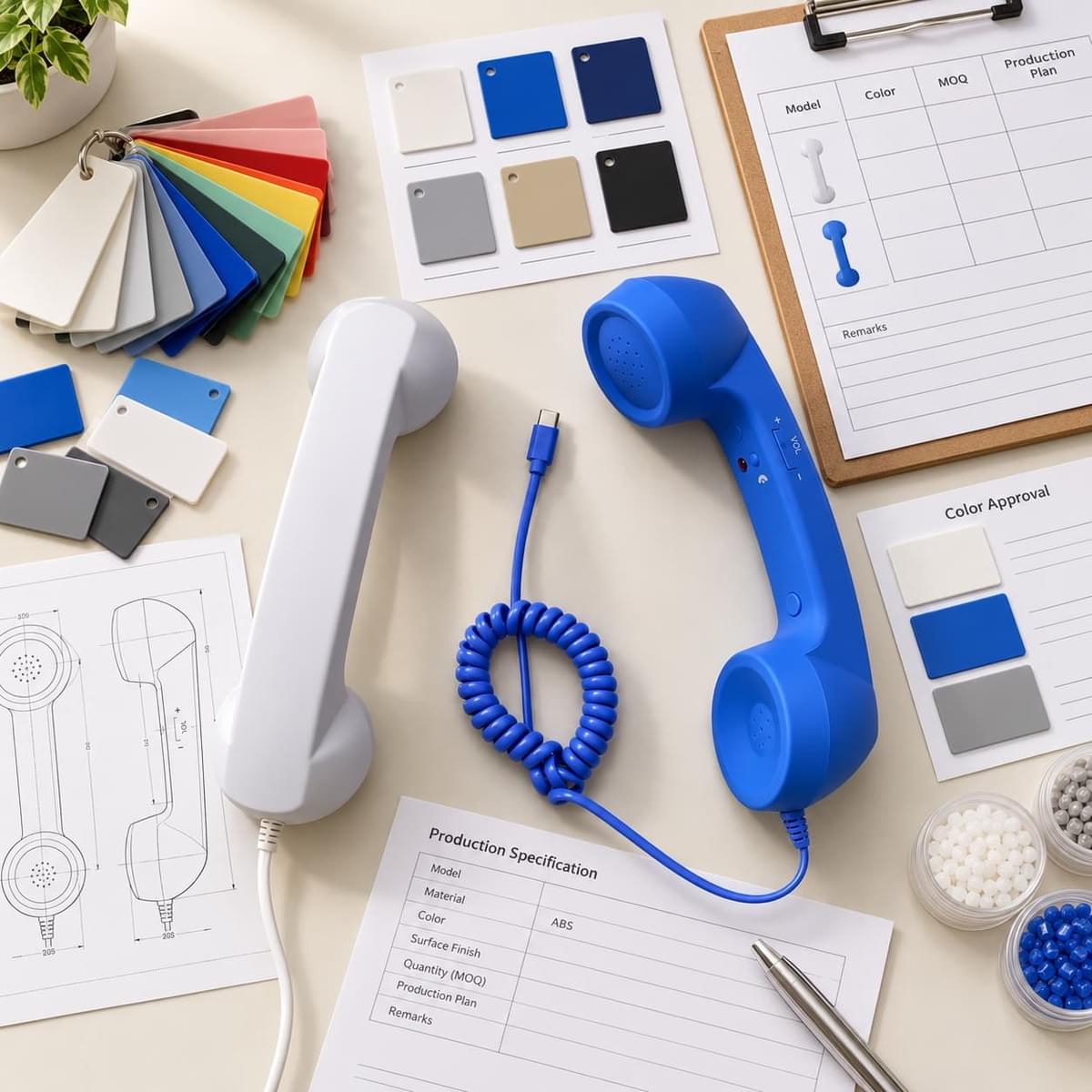
A useful custom-color inquiry should include:
- Handset model
- Connection interface
- Target color or physical color reference
- Required quantity
- Preferred finish
- Target market
- Packaging or private-label requirements
- Expected launch schedule
With this information, the manufacturer can evaluate whether an existing color, custom injection color or another finishing process is the most practical solution.
Model 569 as a Starting Platform for Custom Color Projects
For buyers who want a recognizable retro handset shape with modern USB Type-C connectivity, the Model 569 USB Type-C handset family can serve as an existing platform for color development.
Starting with an established product platform allows the buyer to focus on color, branding and market positioning instead of developing every part of the handset from the beginning.
Standard colors can also be reviewed first to determine whether an existing option already fits the project.
When Is a Custom Color Worth Developing?
Custom color development is most valuable when the color supports a clear commercial purpose.
Examples include:
- A recognizable brand color
- A coordinated retail collection
- A seasonal launch
- A promotional collaboration
- A distinctive private-label product line
If the project is still in early market testing, an existing color may provide a faster and lower-risk starting point.
Once demand is clearer, additional custom shades can be developed for future production runs.
Final Thoughts
Custom color development can make a retro phone handset more distinctive, but successful results depend on more than selecting an attractive shade.
B2B buyers should consider:
color reference → material and process → physical sample → approval → MOQ → mass production.
Treating color as a controlled product-development process helps reduce misunderstandings and creates a more consistent result for retail and private-label projects.
Contact NEW POWER TECH to discuss standard colors, custom color development, samples or OEM/ODM requirements for your retro handset project.
Frequently Asked Questions
Can a retro phone handset be made in a custom color?
Yes. Custom colors can be evaluated according to the handset model, material, required color, production method and project quantity.
Do I need to provide a Pantone color?
A color code is useful, but a physical reference can also help. The final plastic product should still be confirmed through an actual material or handset sample.
Why is the MOQ higher for a custom color?
Custom colors require additional preparation such as color matching, material setup, production changeover and quality control. These steps make very small production runs less efficient than existing standard colors.
Can I approve a custom color from a photograph?
Photographs are useful for communication, but screen settings and lighting can change how a color appears. A physical sample is more reliable for final production approval.
Can I combine standard colors and custom colors in one product range?
Yes. This can be a practical way to reduce development risk while still introducing one or two distinctive brand colors.
Are printed patterns handled the same way as custom solid colors?
No. Printed patterns generally require separate decoration processes and should be evaluated independently from solid-color molding or surface finishing.